Walk through any major town in Osun State, Osogbo, Ile-Ife, Ilesa, Ede, Ikirun, and one truth confronts you immediately: our roads were not designed for people.
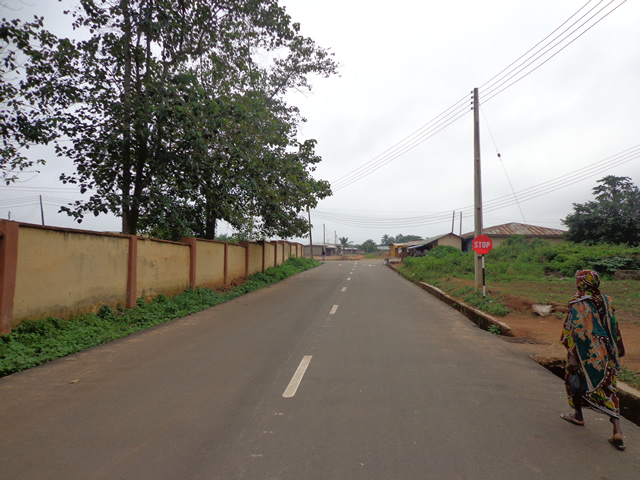
Community roads are narrow. Buildings sit directly on the carriageway with no setbacks. There are no pedestrian walkways. Drainages are mostly open, doubling as refuse dumps, mosquito habitats, and public health hazards. Road users, pedestrians, cyclists, traders, motorists, compete daily in unsafe, uncomfortable spaces.
This is not an accident.
It is the outcome of a deeply flawed road and urban planning philosophy that successive administrations in Osun State, and indeed across Nigeria, have failed to confront.
As Osun approaches the 2026 governorship election, road infrastructure must no longer be discussed only in terms of kilometres constructed or asphalt laid. The real question is simpler and more urgent:
Do our roads serve vehicles, or do they serve people?
Roads as Asphalt, Not as Public Space
In Osun, roads are treated as civil engineering projects, not as social infrastructure. Once a strip of asphalt is laid, the state considers its job done. There is little concern for how people walk, trade, access schools, worship centres, markets, or public transport.
Globally, this thinking is obsolete. Roads are now understood as public spaces, places where mobility, safety, sanitation, commerce, and social life intersect. In Osun, roads are still designed as if people do not exist outside cars.
This is why:
Sidewalks are absent
Pedestrians walk on carriageways
Children and the elderly are exposed to traffic risks
Persons with disabilities are completely excluded
Informal trading spills into the road, worsening congestion
Yet ironically, the majority of daily trips in Osun towns are made on foot.
The Pedestrian: Osun’s Most Neglected Road User
The most striking failure of our road design is the systematic erasure of pedestrians. There is no minimum sidewalk width standard that is enforced. No universal access requirement. No safe school walking routes.
This is not just bad design, it is social injustice. When a state designs roads only for vehicles, it privileges the minority who own cars and punishes the majority who walk.
A road system that ignores pedestrians is a road system that ignores the poor, the young, and the vulnerable.
Open Drainages: Engineering Convenience, Public Health Crisis
The prevalence of open drainage systems on Osun roads reveals another policy failure. Open drains are cheaper to build, but expensive to live with.
They; encourage indiscriminate waste dumping, breed mosquitoes and disease, emit foul odour, collapse and narrow roads further, undermine sanitation and environmental health
These drains represent short-term engineering convenience at the expense of long-term public health and urban dignity.
Why Osun Keeps Building Bad Roads
Three governance failures explain this pattern:
Road Projects Are Disconnected from Urban Planning
Roads are built without integrating land-use planning, building control, transport policy, or environmental health.
Weak Development Control
Even where setbacks exist on paper, enforcement is inconsistent and politically compromised.
Absence of “Complete Streets” Policy
Osun lacks a formal framework that mandates roads to serve all users—pedestrians, cyclists, public transport, traders, and motorists.
What the Next Governor Must Commit to
Osun does not need wider roads everywhere. It needs smarter, people-centred streets. Any serious 2026 governorship candidate must commit to the following:
Adopt a statewide complete streets policy
Mandate pedestrian walkways in all new and rehabilitated roads
Gradually retrofit priority community roads with sidewalks and covered drainage
Enforce setbacks and building lines without political compromise
Integrate road construction with urban planning and sanitation agencies
Publish and enforce road design standards that prioritise safety and accessibility
These are not luxury reforms. They are basic requirements of modern governance.
The Choice Before Osun in 2026
Roads reveal how a government sees its people.
A state that builds roads without sidewalks is a state that expects its citizens to fend for themselves.
As Osun debates its future in 2026, voters must demand more than ribbon-cutting ceremonies and kilometre counts. They must demand roads that are safe, humane, and inclusive.
The next governor must answer one simple question: Will Osun’s roads continue to move cars, or will they finally serve the people who live on them?
Because until that question is answered correctly, no amount of asphalt will move Osun forward.
Sola Fanawopo. President Igbajo Development Association (IDA)
Leave a Reply